


More Than a Dumpling: A Symbol of Family, Tradition, and Heritage
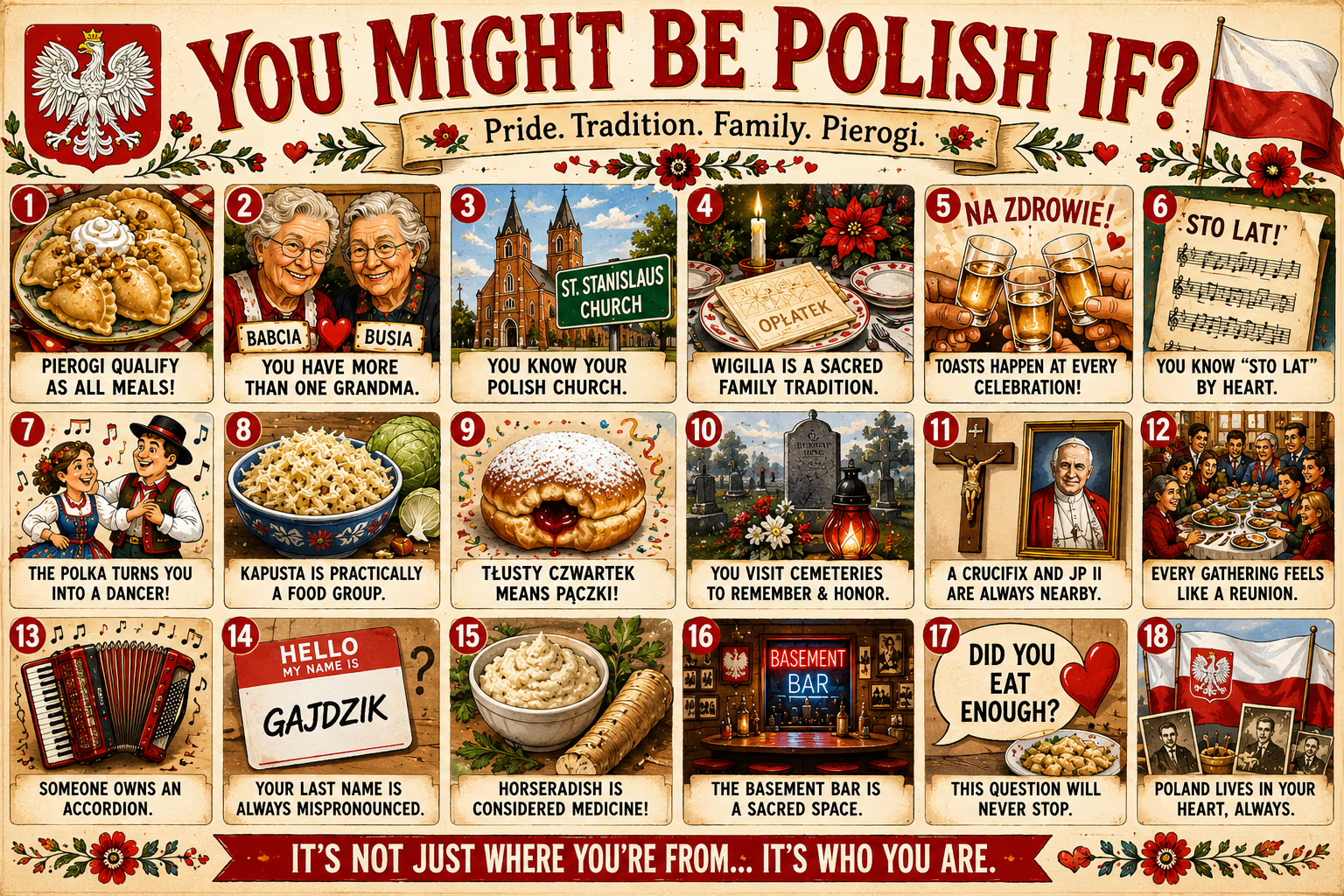
Few foods are as closely associated with Poland as the humble pieróg (plural: pierogi). To many people around the world, pierogi are simply delicious dumplings filled with potatoes, cheese, meat, or fruit. But for Poles and Polish-Americans, pierogi represent something much deeper. They are a symbol of family traditions, cultural identity, hospitality, and the enduring connection between generations.
For centuries, pierogi have occupied a special place at Polish tables. They appear at holiday celebrations, family gatherings, church festivals, weddings, and community events. Whether handmade in a village kitchen in Poland or served at a Polish festival in Cleveland, pierogi continue to bring people together while preserving an important piece of Polish heritage.
What Are Pierogi?
Pierogi are dumplings made from an unleavened dough that is rolled thin, cut into circles, filled, folded, and sealed before being boiled. They may be served immediately, pan-fried in butter, or topped with onions, sour cream, or bacon.
Traditional fillings include:
- Potato and farmer's cheese (pierogi ruskie)
- Sauerkraut and mushrooms
- Ground meat
- Sweet cheese
- Blueberries
- Strawberries
- Cherries
- Plums
- Poppy seed mixtures
While recipes vary by region and family, the basic concept has remained largely unchanged for centuries.
Today, nearly every Polish family has its own favorite recipe, often passed down through generations.
A Dish Rooted in History
The exact origins of pierogi remain debated among historians. Similar dumplings have existed across Europe and Asia for centuries, and culinary traditions often spread through trade routes and cultural exchanges.
What is certain is that pierogi became firmly established within Polish cuisine during the Middle Ages.
Over time, the dish evolved into a uniquely Polish tradition. Different regions developed their own variations using locally available ingredients. Rural families created hearty fillings to sustain agricultural workers, while urban households experimented with more elaborate recipes.
By the 17th century, pierogi had become a beloved part of Polish cooking and were often associated with special occasions and religious celebrations.
The Importance of Pierogi in Polish Homes
Historically, preparing pierogi was rarely a solitary activity.
Making pierogi often brought entire families together. Grandparents, parents, children, and relatives gathered around kitchen tables to roll dough, prepare fillings, and shape dozens-or even hundreds-of dumplings.
This tradition transformed cooking into an opportunity for storytelling, laughter, and family bonding.
Many Polish-Americans recall learning to make pierogi from their mothers and grandmothers. Recipes were often taught by observation rather than written instructions, creating a direct connection between generations.
For many families, pierogi-making remains one of the most cherished expressions of cultural heritage.
Pierogi and Christmas Eve (Wigilia)
Perhaps nowhere are pierogi more important than during Wigilia, the traditional Polish Christmas Eve celebration.
Wigilia is one of Poland's most beloved traditions. The meal typically consists of twelve meatless dishes, representing the Twelve Apostles.
Pierogi are often among the most anticipated dishes served during the evening.
Traditional Christmas Eve pierogi commonly feature:
- Sauerkraut and mushroom filling
- Cabbage-based fillings
- Sweet fruit fillings in some regions
Because Wigilia emphasizes family, faith, and remembrance, pierogi become part of a larger cultural experience that connects families to centuries of tradition.
For many Polish families, Christmas simply would not feel complete without them.
A Symbol of Hospitality
Polish culture places great importance on welcoming guests.
Food has long been an expression of generosity and hospitality, and pierogi often serve as a centerpiece of that tradition.
When visitors arrive, offering food demonstrates warmth, friendship, and respect. A table filled with homemade pierogi reflects the care and effort invested in preparing something meaningful for others.
Throughout Poland and among Polish communities abroad, serving pierogi remains a way of sharing culture and making people feel at home.
Regional Variations Across Poland
Poland's diverse regions have created numerous versions of pierogi.
Southern Poland
Mountain communities often favor hearty fillings that provide nourishment during long winters.
Central Poland
Potato and cheese varieties are especially popular.
Eastern Poland
Many recipes feature buckwheat, mushrooms, and traditional agricultural ingredients.
Northern Poland
Seafood-inspired variations occasionally appear near coastal areas.
Fruit Pierogi
Summer harvests bring sweet pierogi filled with fresh berries, cherries, and plums.
These regional differences showcase the richness and diversity of Polish culinary traditions.
Pierogi in Polish-American Communities
When millions of Polish immigrants arrived in America during the late 19th and early 20th centuries, they brought their culinary traditions with them.
Pierogi quickly became staples in Polish neighborhoods across cities such as:
- Cleveland
- Chicago
- Detroit
- Buffalo
- Pittsburgh
- Milwaukee
Polish churches, cultural organizations, and social clubs often organized pierogi dinners and fundraisers.
These events served two important purposes:
First, they provided financial support for community organizations.
Second, they helped preserve cultural traditions among future generations.
Today, pierogi remain a highlight of Polish festivals throughout the United States.
More Than Food: A Cultural Connection
One reason pierogi remain so important is their ability to connect people with their heritage.
For descendants of Polish immigrants, making and sharing pierogi often serves as a tangible link to ancestors who crossed oceans seeking new opportunities.
A family recipe may preserve techniques, ingredients, and traditions that have survived for generations.
Each batch tells a story:
- Of grandparents teaching grandchildren
- Of immigrant families building new lives
- Of holiday gatherings filled with laughter
- Of traditions preserved despite distance and time
In this way, pierogi become living pieces of history.
Pierogi in Modern Poland
While modern Polish cuisine has expanded to include international influences, pierogi remain enormously popular.
Today they can be found:
- In family homes
- Traditional restaurants
- Holiday celebrations
- Street festivals
- School cafeterias
- Upscale dining establishments
Contemporary chefs continue to create innovative fillings while honoring traditional recipes.
The enduring popularity of pierogi demonstrates their unique ability to bridge the past and present.
Why Pierogi Continue to Matter
The importance of pierogi extends far beyond their ingredients.
They symbolize:
Family
Recipes and techniques are passed from one generation to the next.
Tradition
Pierogi preserve customs that have endured for centuries.
Community
They bring people together at celebrations and gatherings.
Heritage
They connect Polish-Americans to their ancestral roots.
Hospitality
They reflect the Polish tradition of welcoming and caring for others.
Identity
They remain one of the most recognizable symbols of Polish culture worldwide.
A Taste of Polish Heritage
For many people, their first introduction to Polish culture comes through food. Few dishes provide a better introduction than pierogi.
Whether enjoyed during a holiday meal, shared at a family gathering, or served at a local Polish festival, pierogi offer more than nourishment. They provide a connection to history, tradition, and community.
Each carefully folded dumpling carries with it generations of stories, memories, and cultural pride.
That is why pierogi remain one of the most treasured and enduring symbols of Polish culture-not simply because they are delicious, but because they bring people together and help preserve a heritage that continues to thrive around the world.


0 Comments